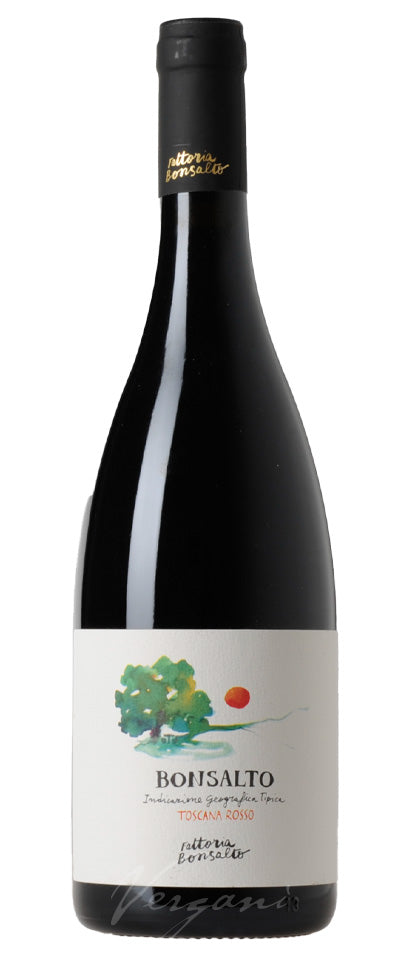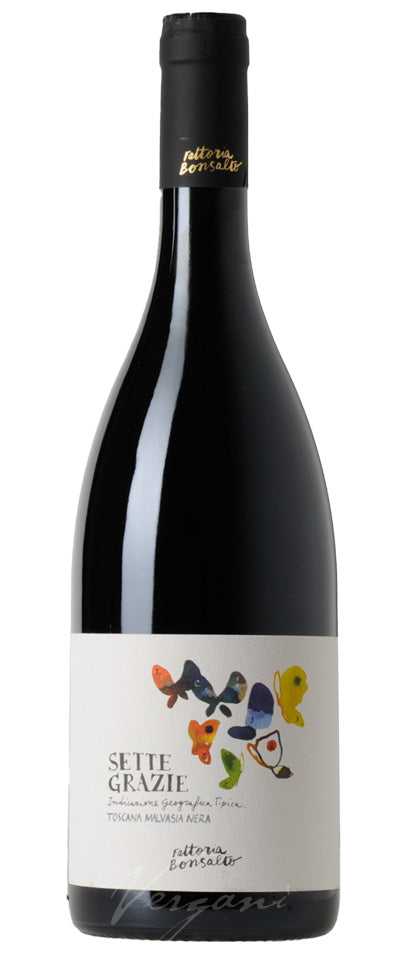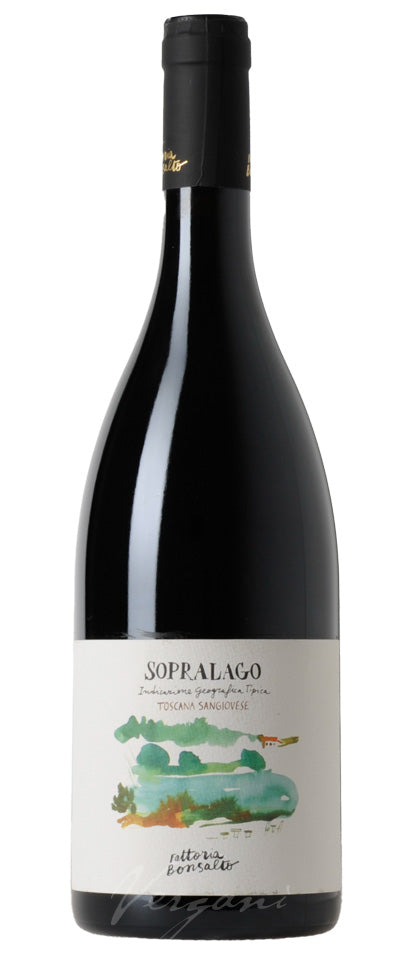




The world of wine is full of so-called heartfelt stories. This one is real. It takes place in Tuscany and revolves around a piece of land that has become a lively and livable habitat for a large family.
People don’t have a habitat; they have a home. Still, the beautiful word, which comes from the Latin "habitare," fits this family and their biotope quite well. However, their living space is no longer limited to the life cycle of a single generation. But okay: back to the beginning.
It all started with the desire of a man who, with a lot of diligence, knowledge, and skill, successfully founded a company in the steel industry and at some point longed for his roots: Azelio Paci. Raised in a farming environment, he followed his gut feeling in the early 1970s and bought a farm located very close to his birthplace. We are 30 kilometers southwest of Florence, in a municipality called Montespertoli. The Etruscans already knew this place along the ancient trade route called Via Volterrana. Then, as now, wine production was part of everyday life on such a farm. Nonno Azelio sold part of it directly and openly, keeping the smaller portion for personal use. For many years, the business flourished for the bottlers in the region, which did not lead to the area becoming particularly well-known for its wines (and unfortunately still isn’t). But nature also thrived at Fattoria Bonsalto.
Anyone visiting the typical estate today will especially notice the rich biodiversity. There is a lake. Trees. Olive groves. Bushes. Vines. Animals. Insects. In total, the estate covers 54 hectares, 22 of which are planted with indigenous grape varieties. And what varieties! Grapes that even seasoned wine connoisseurs and enthusiasts have probably never heard of. “Because we are the only ones who vinify them,” says Maurizio Tramacere Falco with pride. For example, Boggione. An indigenous variety that was already planted here around 1600 and was still present on the estate. But Malvasia Nera also does well. Depending on the region, different varieties are understood under these names. While Malvasia Nera di Basilicata and Malvasia Nera di Brindisi are related and come from southern Italy, Malvasia Nera from Tuscany has very different roots. “That’s right,” says Maurizio Tramacere Falco: “Its genetics definitely point to a Tempranillo clone.” Delicate to cultivate. “We started treating the delicate grape varieties at night,” says Maurizio, because the days and heat already cause enough stress. “We have to adapt,” he adds, but the most important part of all the work is to convey to people how much manual labor goes into every single bottle of wine. “We don’t make industrial wines,” he adds: “Our wines have to evoke emotions.”
Time for a brief summary. Maurizio Tramacere Falco took over the winery with his father-in-law Paolo Paci from Paolo’s father, Nonno Azelio. In 2020, they decided to look ahead and get started. “It hurt me to give away our wines,” says Maurizio, who runs the winery. He much preferred to fully utilize the potential of the place himself, rather than selling the wines by the tank as before. “We make wine for joy and work every day with our hands on a product that also makes other people happy,” he repeats, and you believe him because everywhere you see that a winemaker who loves the soil and environment where his family lives is at work here.
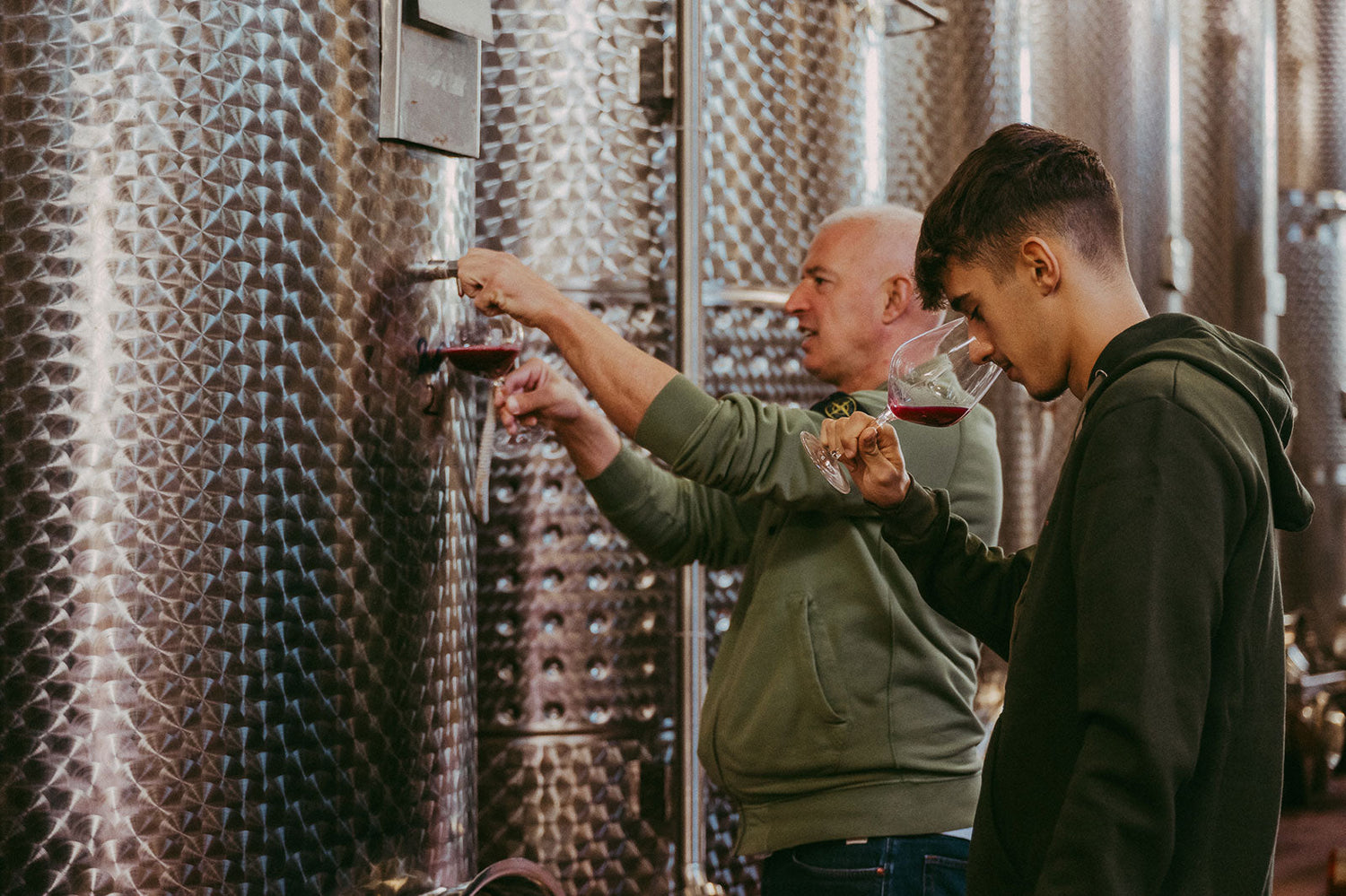
“We have done a lot of rebuilding so that our family can live within a three-kilometer radius. Step by step, each new generation finds its place here,” he explains, and that makes him especially happy. “We don’t have to arrange anything; on Sundays the whole family meets for a picnic by the lake. The younger generation comes with their friends, then we fish, eat, and drink a glass of wine. That is life energy,” Maurizio enthuses, while the new generation also lends a hand in the vineyards. Manual work also happens in the cellar, where a friend and oenologist ensures the necessary precision.
“Enjoyment of drinking is important to us. We don’t look for heavy, dense wines; we want wines that are fresh, harmonious, and easy to drink, and that impress with their fruit,” Maurizio sums up. Even though the path there can vary from year to year and from wine to wine, innovation remains a constant in the cellar. Wood. Cement. Terracotta. Steel. Spontaneous fermentation. Production is uncompromisingly organic, even if – as in 2023 – a large part of the grape harvest can be lost. “That’s nature,” says Maurizio.