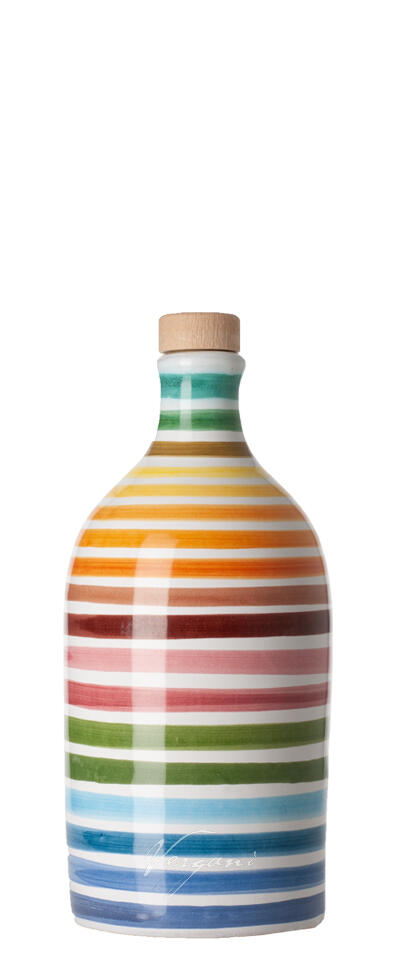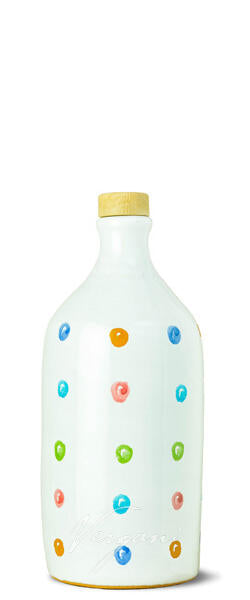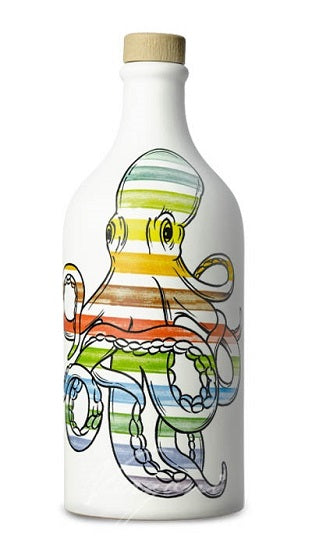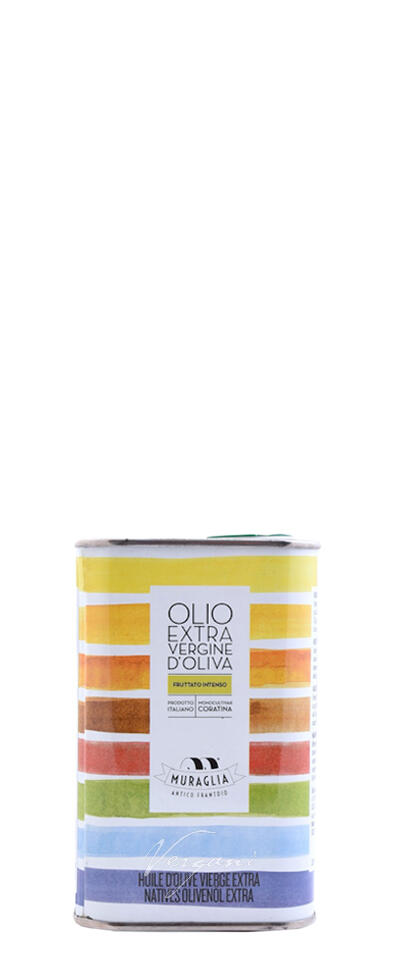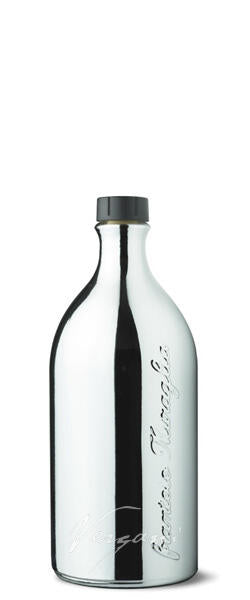



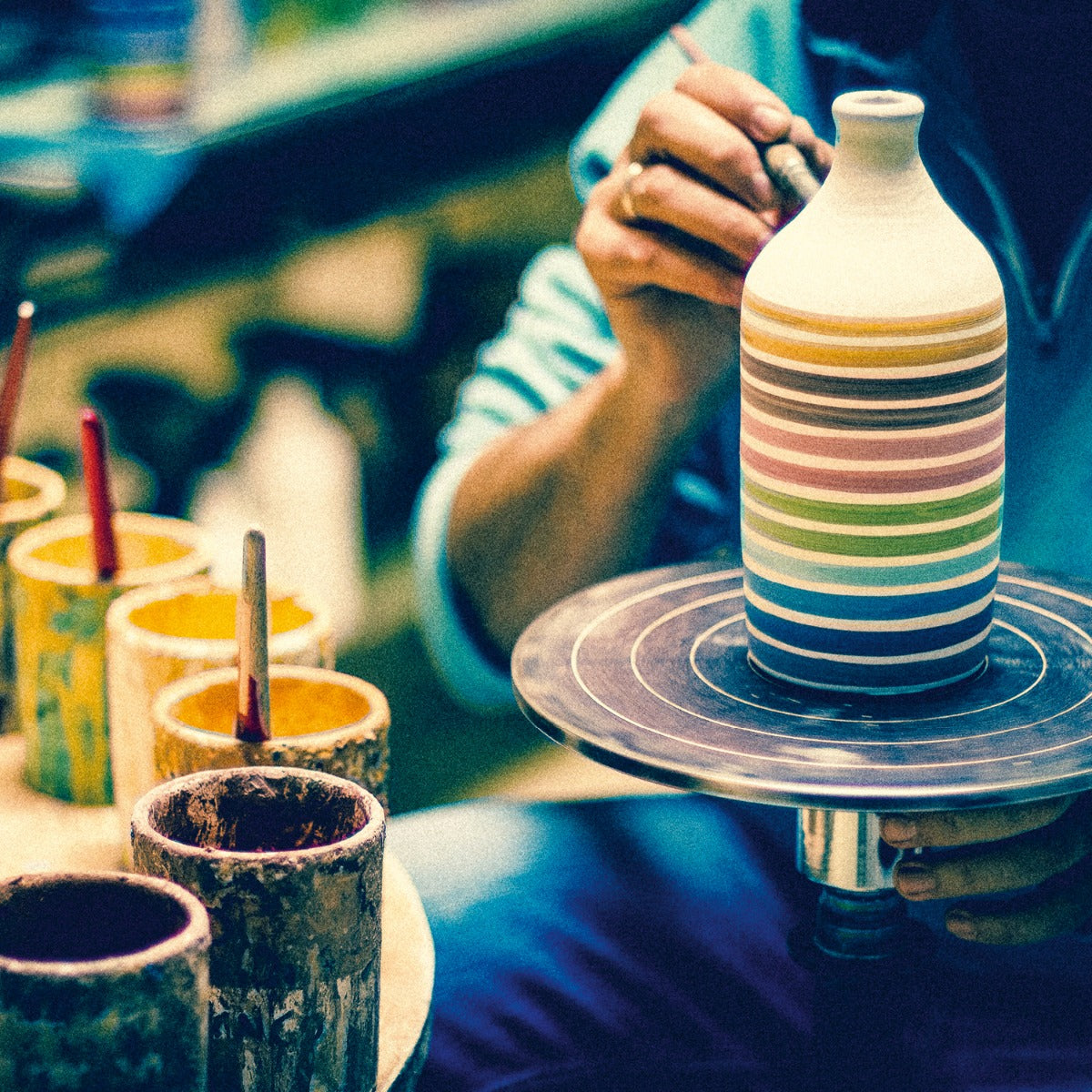
Appearance is one thing, but the colorful ceramic bottles also make sense from a quality perspective. In any case, they and their production philosophy are just one of many quality aspects that vividly express the love for detail, the best quality of olive oil, and the region and its people. Off to Andria.
In Apulia lies the capital of Italian olive oil: Andria. For over 80 years, the Frantoio Muraglia has been pressing the best that olives can offer here. Liquid gold. The harvest is done by hand, but the biodiversity in the olive groves and the entire agricultural landscape of the company remains untouched. "Enhance and improve" are our favorite words, says Savino Muraglia. He runs the company founded by his grandfather, Savino the Elder. However, the true king on the grounds has been the gnarled Croatina olive tree for nearly 500 years. In its habitat, it has probably seen everything there is to see locally, but it would never have made it out into the world alone. For that, you need at least a testa dura—a visionary stubborn head. Someone like Savino the Elder had. He founded Frantoio Muraglia and was convinced from the start that only with your own mill could you control the quality of the oil. This also allows for the rapid processing of the olives. And that is exactly what it’s about when you want to produce quality. No one here knows that better than Savino’s son, Vincenzo—the master of oil. With the current oil mill, they doubled the output per working hour, but the goal was not to double production, rather to speed up the processing time of the harvested olives. Currently, only two hours pass from the olive harvest to pressing. This is done—state of the art—in a closed extraction process, so oxygen contact is almost completely avoided. The secret to quality is therefore the company’s own olive groves and their natural care, manual harvesting, short delivery routes, temperature control throughout the production process, and rapid further processing in their own mill. Only in this way can consistently fresh, fruity, or simply perfect olive oils be produced.
The basic prerequisite to stand out with olive oil at all is an uncompromising obsession with quality. It is the unconditional dedication to the terroir, to nature, to biodiversity, and the will to handle it gently. Forty hectares of Croatina olive groves do not take care of themselves, and anyone who thinks of fully automatic harvesting machines that shake the old, sensitive trees and compact the soil knows little about the Muraglia family. Agriculture is a matter of honor here; they are "una famiglia prima che un’azienda"—family first, then a business. Among other things, they research carbon cultivation and advocate for renewable energy sources and organic fertilizers, which are produced here through the bio-fermentation of the company’s waste by-products. "This way, we create new tools for agriculture from traditional production waste," says Savino, and this not only reduces environmental impact but also lowers fertilizer costs. They have also put the water consumption of production on their radar. With all the methods already applied, it is continuously decreasing.
Savino the Younger knows no rest. He was the one who expanded the business. Today, over 30,000 trees need to be managed, and the time when it was quiet for 300 days a year is long gone. This is partly due to the pursuit of quality and partly due to the overall brand presence. Half of the production from Frantoio Muraglia is exported in brightly painted bottles—this, alongside the countless awards the oil has won over the years, is another great success for the original vision of grandfather Savino, who was repeatedly confronted at the start of his efforts with the claim that you could no longer make your fortune with olives in Apulia. That may be true, especially when you know that fortune with olive oil is reserved only for the sustainably diligent.
However, climate also plays an increasingly decisive role here. "What is becoming more and more apparent is that olive trees need more irrigation with the changing climate," says Savino, because the conditions in Apulia increasingly resemble the climate of North Africa, which means that water becomes the decisive factor for the quality of the olives and thus also the oil. On the one hand, it is about reducing water consumption, but also ensuring water management for the groves. The challenges are certainly not getting smaller, but anyone who thinks the Muraglias will give up is mistaken. The next big project in terms of quality improvement in production is already in planning and should be completed next year. That’s right, it’s about a new mill, even better tailored to their needs. Savino did not want to reveal more details yet. We’ll stay tuned.