


Mauro Vannucci had a good instinct and a fine nose. But he was not the first to come up with the idea of cultivating Cabernet vines about 14 kilometers west of Florence. Here in Carmignano, the story of the Supertuscans began in 1533.
Admittedly, the story is beautiful. Historically, it is not without controversy. It concerns the wedding of Caterina de’ Medici and King Henry II of France. It is true that the two were married quite pompously on October 28, 1533, in Marseille. The day before, the final contracts were signed, then celebrations and gift exchanges took place. Allegedly, this is how dining forks came from Italy to France and Cabernet Franc from France to Italy—more precisely, to Carmignano. There, the Medici—exactly when is not entirely clear—planted the "uva francesca," introducing a touch of Bordeaux to Tuscany. One could say they unknowingly created the first Supertuscans. This would mean that these wines are much older than Robert Parker and others have led us to believe.
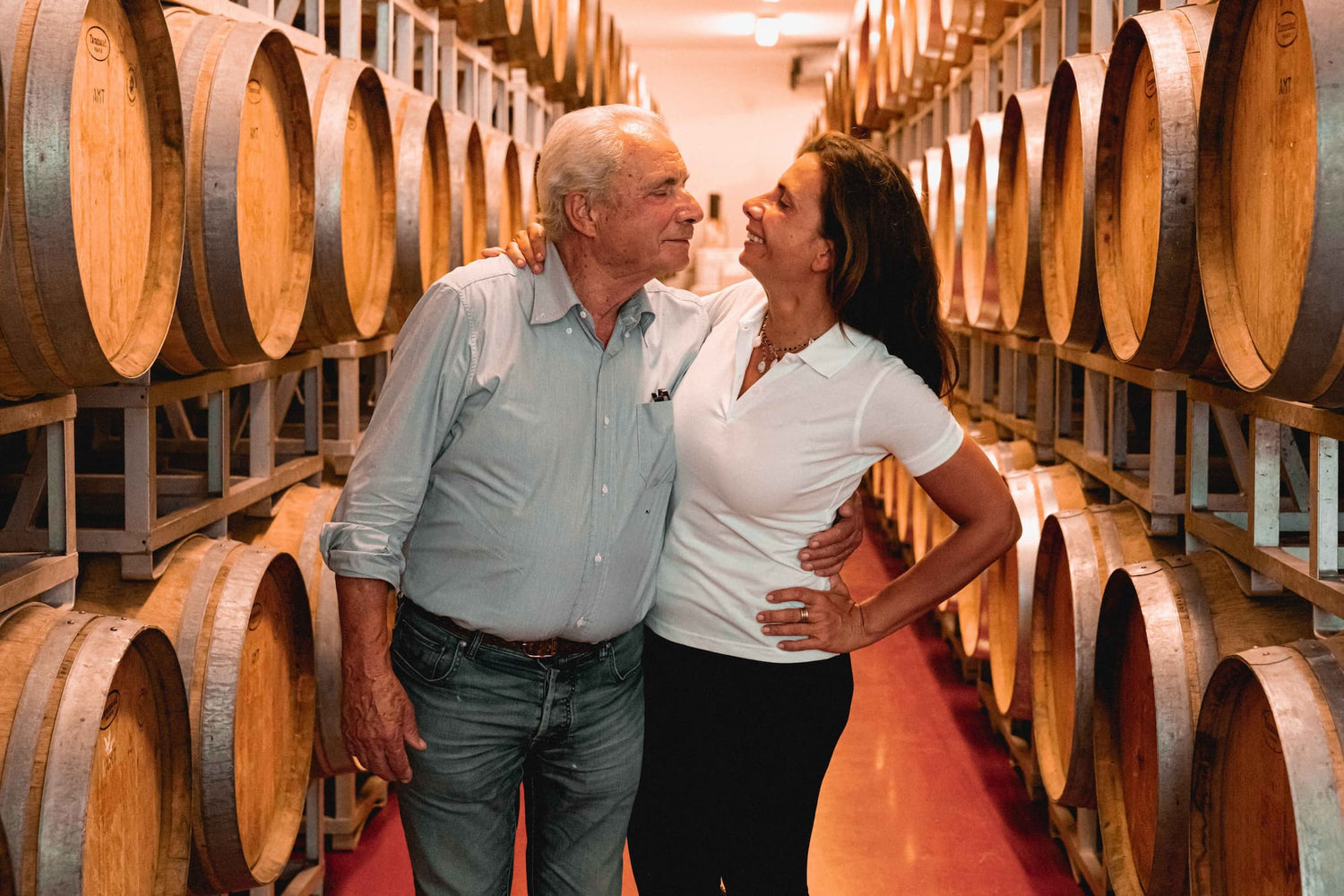
"That’s true," confirms Silvia Vannucci. "All the winemakers here are firmly convinced of that." She is the daughter of Mauro Vannucci, who built up the Piaggia winery and is now 85 years old. "He is still engaged with brain and heart in the family winery," says his daughter, who is now responsible for it. He is entrusted with strategic questions and also takes care of purchasing new plots, she explains. Originally, she studied law but ended up in wine after all. "For my father, the vines and wine were first a hobby, then a passion, and from that came a job," she explains. "As a girl, I helped in the cellar, bottling the wine," she adds. Even today, you can find her with her father, her husband, and her uncle in the cellar. "Oenological decisions, such as defining the blends, we make together as a team," she says. And what are they looking for? "From our point of view, a characteristic Carmignano is full-bodied and intense, made from ripe fruit, with round tannins," she describes the house style. This starts in the vineyards. "We are convinced that great wines are made in the vineyard, not in the cellar. Only healthy, ripe, perfectly balanced grapes can reflect the typicity of the terroir," she says, and of course, vineyards in complete harmony with the environment are a given for them. "That means we carry out agricultural management carefully, with precise manual work and as few interventions as possible," she explains. There is a lot of work behind these words.
The journey of the Piaggia winery began in 1972 when Mauro Vannucci bought a house in the municipality of the same name, which also included a vineyard slope. "My father was sure that the exposure and terroir were made for great wines," explains Silvia. But Mauro Vannucci also knew that wines from Carmignano had been sought after in Florence since the 14th century and that the area is one of the oldest documented wine-growing regions in Tuscany. In the 18th century, Grand Duke Cosimo III de’ Medici introduced a controlled designation of origin for Carmignano, even with a quality commission that classified the wines. The words "Denominazione d’Origine Controllata e Garantita" were still far from being used then, but that was exactly what it was. The Vannucci family winery is located in the municipality of Poggio a Caiano, in the province of Prato, about 14 kilometers west of Florence. The vineyards are situated in the Carmignano growing area, partly in Poggio a Caiano and partly in the municipality of Carmignano itself.
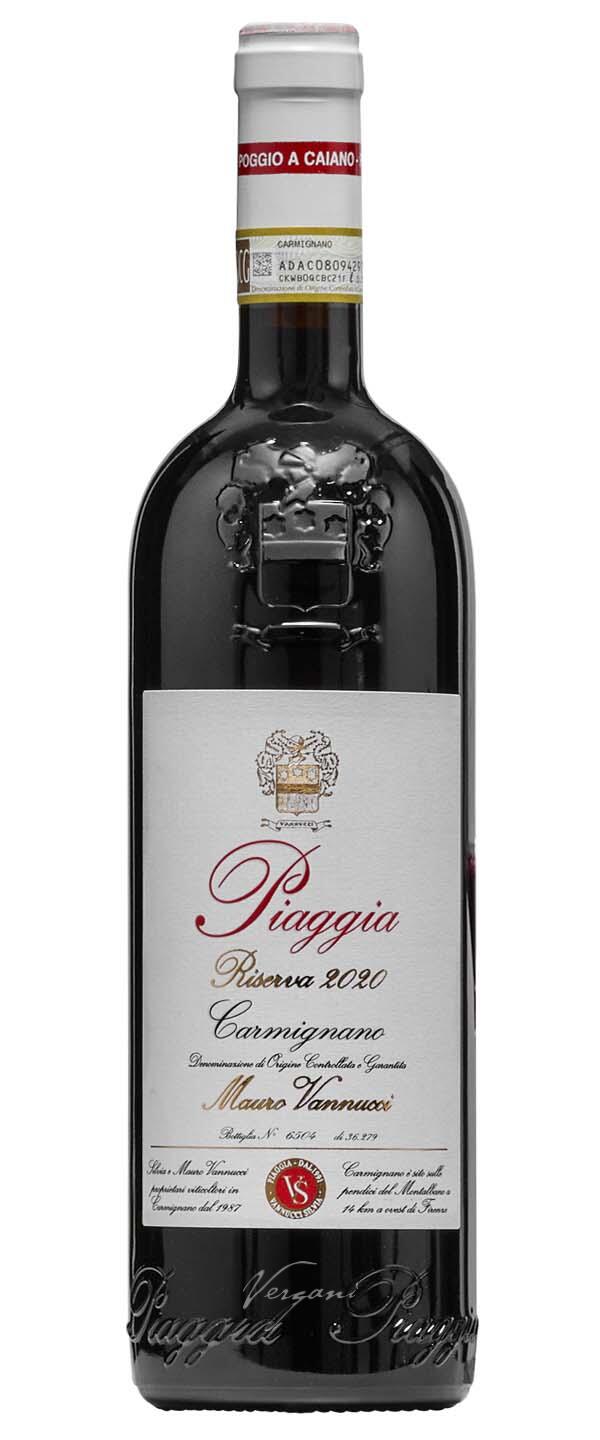
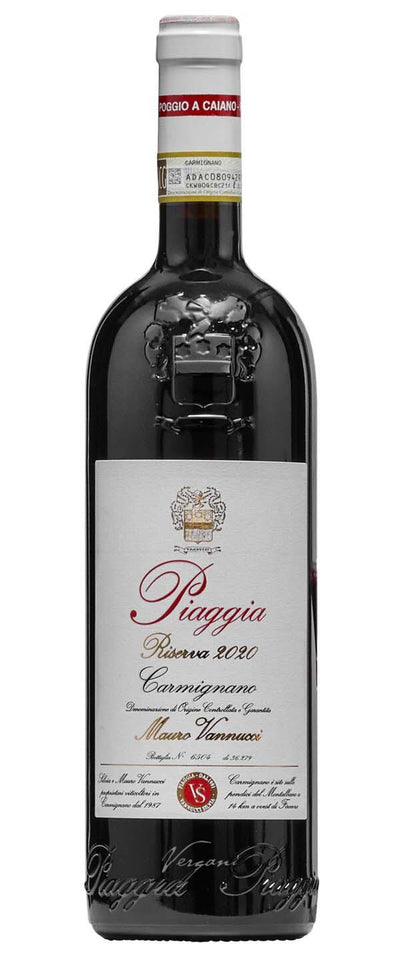
The first wine, Piaggia Carmignano Riserva DOCG, was launched in 1991, and the rest is a success story that has grown bigger and more well-known, now becoming a winery with 30 hectares. "At the moment, I really like the Poggio de’Colli a lot. A one hundred percent Cabernet Franc. We planted the vines in 2001, and they produce incredibly beautiful grapes," Silvia enthuses. For this wine, the best plots in the vineyard are selected. The grapes are hand-destemmed, the must stays in contact with its own yeasts for about 20 days, which also initiate fermentation in open wooden vats. The malolactic fermentation then takes place in French oak barriques from the Allier forests. The wine is unfiltered and impresses with its depth and, on the nose, with balsamic notes, fresh mint, and ripe forest fruits. "Of course, every wine is different, but all carry our signature," emphasizes Silvia, who, besides handling all commercial and administrative matters, is also involved in cellar work during harvest time.
When asked if there is already a new idea in the works, she answers no. "At least nothing ready to announce," she adds mischievously, but she can reveal that her father has always wanted to bottle a pure Merlot at some point. One thing is certain: the Vannucci family keeps finding new ways on the path to perfecting their own signature and this unique terroir.